Post-Quantum Privacy Is Already Urgent
Post-quantum cryptography is not future panic. It is a current privacy problem for sensitive data that attackers can collect now and decrypt later.

Post-quantum cryptography matters for privacy now because attackers can collect encrypted data today and decrypt it later if quantum computers eventually break today’s public-key encryption. The practical question is not whether you should panic, but whether your most sensitive long-lived data is already exposed to “harvest now, decrypt later” risk.
Quantum computers are not currently breaking ordinary encrypted messaging, banking sessions, VPNs, or password managers at scale. But privacy protection is always a timing problem: medical records, legal files, source documents, identity data, location histories, and political communications may remain sensitive for years or decades. That is why post-quantum cryptography has moved from research topic to migration issue, and why privacy-focused readers should treat it as a data-retention and vendor-accountability problem rather than a futuristic computer-science curiosity.
Prefer listening? Click play below, or listen to this episode on RedCircle.
Will post-quantum cryptography protect private data that is encrypted today from being decrypted in the future?
Sometimes, yes. But only if the system protecting that data uses quantum-resistant key exchange or encryption before the data is intercepted, stored, or backed up. Post-quantum cryptography does not magically repair old encrypted traffic that was already captured under vulnerable key exchange. It also does not fix weak passwords, compromised endpoints, cloud accounts, spyware, bad key management, or companies that retain too much personal data.
Most public discussion gets this wrong. The popular version is “quantum computers will break encryption.” The more accurate privacy version is: some widely used public-key cryptography is at risk, especially where an attacker can store encrypted traffic now and wait. Symmetric encryption such as AES is affected differently than public-key systems like RSA and elliptic-curve cryptography. The biggest immediate concern is not your encrypted note being cracked tomorrow; it is an adversary quietly archiving protected traffic today because the contents will still be valuable later.
 Omar Torres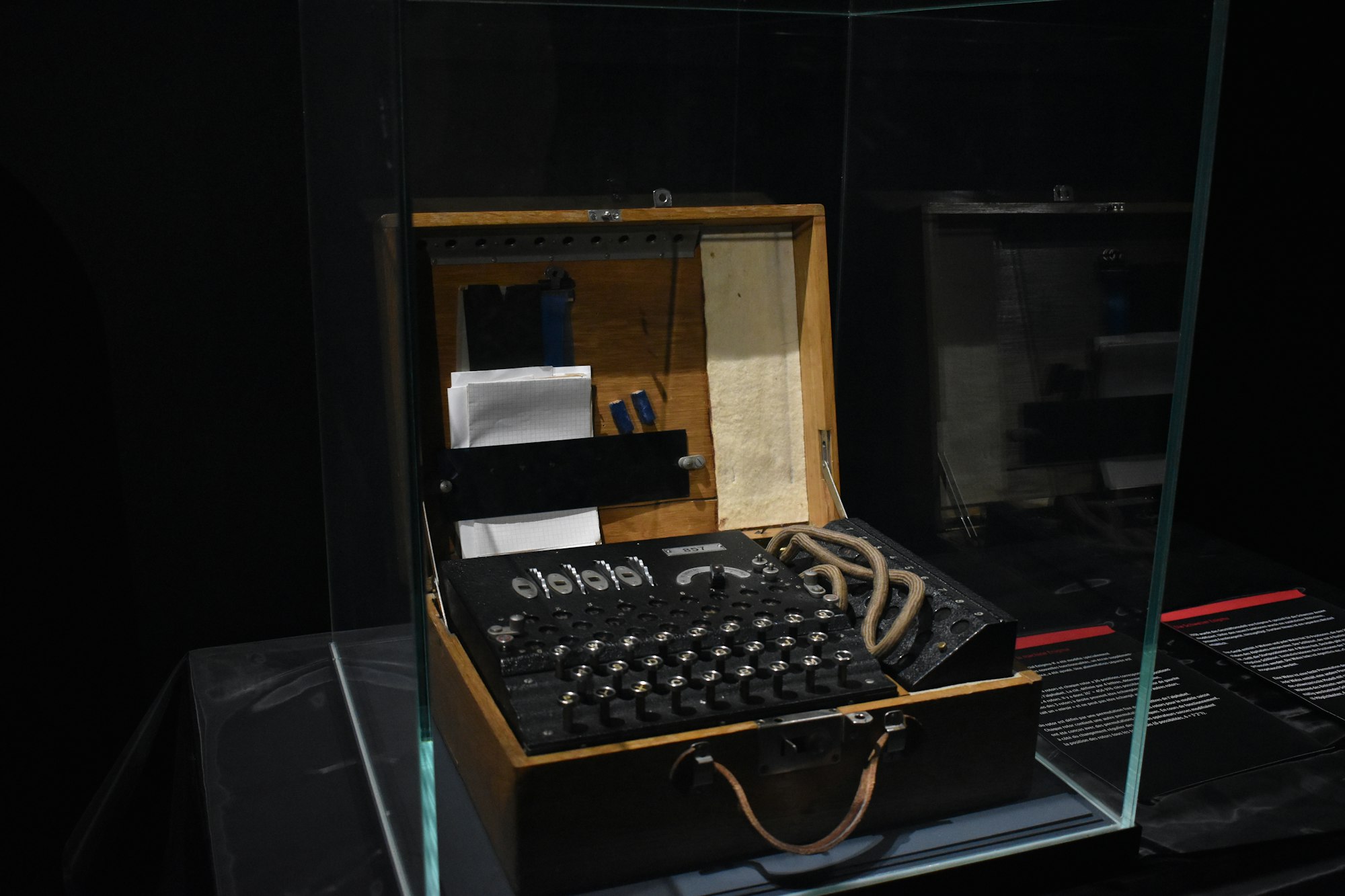
Why does “harvest now, decrypt later” change the advice?
Old privacy advice often assumes that encrypted traffic loses value quickly. That assumption is no longer safe for everyone.
If your data has a short shelf life, the quantum threat is mostly indirect. A food delivery receipt or routine shopping confirmation is unlikely to matter years from now. But if the data can harm you five, ten, or twenty years later, the calculation changes. Journalists, activists, lawyers, executives, healthcare providers, researchers, dissidents, abuse survivors, and people living under repressive laws should care sooner.
The U.S. National Institute of Standards and Technology finalized its first post-quantum cryptography standards in 2024, including ML-KEM for key establishment and ML-DSA and SLH-DSA for digital signatures: NIST PQC standards announcement. CISA has also urged organizations to build quantum-readiness roadmaps rather than wait for a dramatic “Q-Day”: CISA quantum-readiness guidance. NSA’s public post-quantum cybersecurity resources point national-security systems toward quantum-resistant algorithms and migration planning: NSA post-quantum cybersecurity resources.
The people who need protection most cannot wait until quantum attacks are practical. By then, the relevant data may already be sitting in an archive.
Subscribe for trusted privacy and security insights sent to your email.
Which private data is most exposed to future quantum decryption?
The most exposed data has three traits: it is encrypted in transit, it is valuable for a long time, and it may be collected by a patient adversary.
| Data type | Quantum privacy risk | Why it matters |
|---|---|---|
| Legal, medical, and identity records | High | Sensitive for decades and hard to change |
| Journalist-source messages | High | Retaliation risk may grow over time |
| Corporate secrets and research | High | Long-term commercial and geopolitical value |
| Routine web browsing | Medium | Risk depends on content and retention |
| Low-value transactional alerts | Low | Often loses sensitivity quickly |
Many organizations do not know which systems use RSA, elliptic-curve cryptography, TLS termination, VPN gateways, SSH, code signing, S/MIME, hardware security modules, or long-lived certificates. Many individuals do not know whether a private app protects message content, metadata, backups, attachments, or only transport. That uncertainty is the real privacy gap.
 Omar Torres
Are Signal, iMessage, and Cloudflare actually post-quantum safe?
Three widely known examples show both the promise and the limits of post-quantum privacy.
Signal added post-quantum protection to its protocol with PQXDH and later continued work on post-quantum ratcheting. Signal’s privacy advantage is that it treats messaging as a high-risk, long-lived confidentiality problem, not merely a feature checkbox: Signal on PQXDH. The tradeoff is that Signal protects Signal conversations; it does not protect your phone backups, screenshots, contact discovery risks, or the fact that your device itself may be compromised. For privacy-critical users, Signal is a strong choice, but it is not a force field.
Apple iMessage introduced PQ3, a post-quantum protocol upgrade for iMessage: Apple on iMessage PQ3. The upside is scale. Apple can move post-quantum protections to millions of users without asking them to understand cryptographic migration. The risk is ecosystem dependency. iMessage privacy is strongest inside Apple’s controlled environment, and users still need to think about iCloud backups, device security, contact verification, and conversations that fall back to SMS or RCS outside the protected channel.
Cloudflare has pushed post-quantum support across parts of its network and has publicly described a roadmap toward broader post-quantum security: Cloudflare post-quantum roadmap. The advantage is infrastructure reach: when a major network provider upgrades TLS and edge services, many websites benefit indirectly. The tradeoff is concentration. Privacy-minded site operators should welcome stronger transport security while still asking whether relying on a large intermediary changes their threat model, logging exposure, legal exposure, and metadata surface.
Post-quantum features are good, but “supports PQC” is not the same as “protects your privacy.” Ask what layer is protected, what data is excluded, and whether the vendor can explain the migration without hand-waving.
Clear steps to protect your digital life.
What do people misunderstand about post-quantum cryptography privacy?
The first misunderstanding is that post-quantum cryptography is only for governments and banks. That is wrong. Governments and banks may move first because their risk models are formal, but ordinary people also create long-lived sensitive data: health histories, private photos, immigration records, union activity, reproductive health information, political messages, and location trails.
The second misunderstanding is that the threat begins when a powerful quantum computer exists. For long-lived secrets, the threat begins when encrypted data is collected. If someone can capture encrypted traffic today, they can wait.
The third misunderstanding is that a quantum-safe algorithm automatically means a quantum-safe product. Implementation failures still matter. Side channels, downgrade attacks, broken random number generation, insecure backups, metadata collection, malicious endpoints, weak recovery flows, and overbroad logging can defeat the privacy promise before the math is ever tested.
The fourth misunderstanding is that users should go shopping for “quantum-proof” tools immediately. Be skeptical of that label. Strong vendors tend to explain specific protocols, standards, limitations, and rollout status. Weak vendors use quantum language as marketing fog.
 Omar Torres
How should privacy-conscious people prepare without overreacting?
Treat post-quantum cryptography as part of a broader privacy-risk audit.
- Identify long-lived sensitive data. Focus on data that would still hurt if exposed in 2030, 2035, or later.
- Move sensitive conversations to services with credible end-to-end encryption. Prefer tools that publish technical explanations and have a record of independent scrutiny.
- Reduce unnecessary retention. The safest archive is often the one that does not exist. Delete old exports, abandoned backups, stale cloud folders, and unneeded message histories.
- Ask vendors specific PQC questions. “Do you support post-quantum cryptography?” is too vague. Ask whether they use ML-KEM or another standardized/hybrid approach, which protocols are covered, whether backups are included, and whether downgrade resistance is addressed.
- Separate content privacy from account security. PQC does not protect you from phishing, SIM swaps, stolen devices, spyware, or weak account recovery.
- Prefer crypto-agile systems. The most trustworthy systems are designed to swap algorithms as standards evolve. Post-quantum migration will not be a one-time patch.
This is where many privacy guides are outdated. They still rank apps as if encryption were static. In 2026, a serious privacy review should ask whether the product is preparing for algorithm migration, whether it can update safely at scale, and whether it minimizes stored data in case cryptography fails later.
 Omar Torres
Subscribe: Spotify, YouTube, Amazon Music, RSS, Apple Podcasts
Should small websites care about post-quantum cryptography now?
Yes, but the priority is not usually to rebuild your stack overnight.
For a small privacy-focused website, the first job is to understand dependency. Your TLS may be handled by a host, CDN, reverse proxy, certificate authority, or managed platform. Your email security may depend on a mail provider. Your user data may sit in analytics tools, newsletter software, payment processors, or support platforms. PQC readiness is partly your responsibility and partly your vendors’ responsibility.
A small site should start by mapping where sensitive data enters, travels, and rests. Contact forms, membership portals, account systems, private comments, support messages, and newsletter databases deserve more attention than static public pages. If you collect sensitive personal data, minimizing collection may do more for future privacy than waiting for perfect quantum-resistant infrastructure.
The practical standard should be: collect less, retain less, encrypt well, and choose providers that can explain their post-quantum roadmap.
What should you ask a vendor about post-quantum privacy?
Ask questions that force specifics.
A serious vendor should be able to say which data flows are protected, whether protection applies to transport, storage, signatures, backups, or internal service-to-service traffic, and whether the deployment is hybrid. Hybrid deployment matters because many systems combine classical and post-quantum algorithms during the transition. That can reduce the risk of relying too early on a newer algorithm while still adding protection against future quantum attacks.
Watch for evasive answers. “Military-grade encryption” is not an answer. “Quantum-proof” is not an answer. “We use AI-powered security” is definitely not an answer. Good answers name protocols, standards, rollout stages, and limits.
 Omar Torres
Enjoying this article? Make it easier to find more like it. Select The Privacy Report as a preferred source on Google and get more of our reporting in your results.
FAQs about post-quantum cryptography privacy
Is post-quantum cryptography the same as quantum encryption?
No. Post-quantum cryptography usually means classical cryptographic algorithms designed to resist attacks from future quantum computers. It does not require a quantum computer or quantum network to use.
Can quantum computers break my encrypted messages today?
There is no public evidence that quantum computers can currently break modern end-to-end encrypted messages at scale. The concern is that some encrypted data collected today could be decrypted later if it was protected by quantum-vulnerable public-key cryptography.
Does post-quantum cryptography protect metadata?
Usually no. PQC can protect keys, encryption, and signatures, depending on implementation. It does not automatically hide who contacted whom, when, from where, or through which service.
Should I stop using apps that do not advertise post-quantum encryption?
Not automatically. A well-designed encrypted app without full PQC may still be safer than a vague “quantum secure” product with poor transparency. For highly sensitive, long-lived communications, however, credible post-quantum planning should influence your choice.
What is the biggest personal step I can take now?
Reduce long-term sensitive data exposure. Use credible end-to-end encrypted tools, delete unnecessary archives, secure your devices, and avoid services that collect more personal data than they need.
What to do next: Audit your oldest sensitive encrypted data and delete anything you no longer need.


