Beyond Public Safety: Why Your Car is a Moving Beacon
Your license plate is more than a vehicle identifier. License Plate Reader (LPR) networks can turn ordinary driving into a searchable location history built from metadata.

License plate reader privacy matters because your plate is no longer just a public identifier; it is a persistent tracking key tied to time, place, direction, and routine. Even when each scan seems harmless, repeated scans can reveal where you live, work, worship, seek medical care, protest, shop, and who you spend time near.
Most people understand that phones, apps, and browsers can track them. Fewer realize their car can produce a parallel trail even when the phone is off, the browser is locked down, and the person behind the wheel has done “everything right.” License Plate Readers, or LPRs, were sold to the public as tools for finding stolen vehicles and solving serious crimes. That intended use still exists. But the privacy problem is bigger now: public roads have become a data source for police departments, private camera networks, repossession companies, insurers, landlords, homeowners associations, and commercial analytics firms.
Prefer listening? Click play below, or listen to this episode on RedCircle.
What is the real privacy risk of license plate readers?
The real risk is not that a single camera sees your car once. The risk is that many cameras, operated by many entities, can build a movement history around a stable identifier you cannot realistically rotate: your license plate.
A plate scan typically includes the plate number, an image of the vehicle, location, date, and time. Some systems also capture vehicle make, model, color, direction of travel, and contextual images. The Electronic Frontier Foundation describes automated license plate readers as cameras that record the time, date, and location where a particular car was encountered: https://www.eff.org/cases/automated-license-plate-readers
That may sound boring. That is exactly why it is dangerous.
Privacy failures often start with boring data. A receipt timestamp. A Wi-Fi connection. A DNS query. A license plate scan. None of these necessarily expose your private life in isolation. But they become revealing when collected repeatedly, joined with other records, and analyzed over time.
This is the same pattern behind digital receipts, loyalty programs, carrier location data, browser fingerprinting, and smart car telemetry: the individual event looks trivial, but the pattern is intimate.
 Omar Torres
Why do people misunderstand “nothing to hide” when their car is tracked?
The “nothing to hide” argument treats privacy as secrecy. That is the wrong frame.
You may not care if someone sees you drive past a grocery store. You may care if a searchable database shows that you visit an oncology clinic every Wednesday, sleep at one address most nights, park near another address twice a week, attend a certain religious institution, or appear near a labor organizing meeting.
The issue is not shame. The issue is power.
A person casually observing your car on a public street forgets you. A database does not. A person standing on a corner cannot instantly search your past movements across a city. A networked LPR system can. A neighbor might know your car. A commercial data system can connect your car to a lender, insurer, investigator, agency, or data broker ecosystem.
This is where “public” stops being simple. Yes, your plate is visible in public. But public visibility is not the same thing as automated, persistent, searchable, shareable surveillance.
That distinction matters. Society has always tolerated ordinary observation in public because human observation is limited by attention, memory, distance, and cost. LPR networks remove those limits.
Subscribe for trusted privacy and security insights sent to your email.
How were license plate readers supposed to be used?
The public-safety case for LPRs is straightforward: compare plates against “hot lists” for stolen vehicles, wanted suspects, missing persons, Amber Alerts, or vehicles associated with serious investigations. In that narrow use case, an LPR camera acts like a fast lookout. It sees a plate, checks it against a list, and alerts law enforcement when there is a match.
Used narrowly, with short retention, strong auditing, local control, and warrant requirements for historical searches, LPRs can support legitimate investigations.
But the gap between “find stolen cars” and “store everyone’s movements just in case” is enormous.
That gap is where privacy erodes. Once the data exists, new uses appear. Police departments ask for broader sharing. Vendors pitch analytics. Agencies search historical records. Private businesses install cameras for property protection. Repossession networks capture plates at scale. Data that was supposedly collected for one purpose becomes useful for many others.
This is mission creep in its most familiar form: a tool justified by extreme cases becomes normalized for everyday tracking.
How does commercial LPR data scraping change the surveillance equation?
Commercial LPR scraping changes the equation because it moves vehicle tracking beyond a single police department and into a market.
Unlike a city-owned camera at a fixed intersection, commercial LPR data can come from networks of tow trucks, repossession vehicles, parking lots, private communities, retailers, and business security cameras. The data may be sold, licensed, queried, combined with public records, or made available through platforms that serve law enforcement, lenders, insurers, and investigators.
That commercial layer is the privacy blind spot.
People usually debate LPRs as a government surveillance issue. That is incomplete. The government does not need to build every database itself if private companies build them first. Data brokers and commercial surveillance vendors can create a workaround: collect data through private channels, then sell access or insights to public and private clients.
The Federal Trade Commission’s action against Mobilewalla is a useful parallel. The FTC said the company sold sensitive location data and failed to take reasonable steps to verify consumer consent: https://www.ftc.gov/news-events/news/press-releases/2024/12/ftc-takes-action-against-mobilewalla-collecting-selling-sensitive-location-data
That case was about mobile location data, not license plates. But the underlying privacy lesson is the same: location trails become sensitive because they reveal behavior, identity, association, and vulnerability.
Subscribe: Spotify, YouTube, Amazon Music, RSS, Apple Podcasts
What is the Mosaic Effect in license plate reader privacy?
The Mosaic Effect is the idea that many small pieces of information can reveal something far more sensitive when assembled together.
One license plate scan says: this vehicle was here at 8:14 a.m.
Ten scans say: this vehicle takes this route.
A hundred scans say: this vehicle likely belongs to someone who lives here, works there, visits this person, attends this clinic, shops at that store, and leaves town on certain weekends.
The sensitive fact is not always inside the original data point. It emerges from the pattern.
Here is the step-by-step version:
- A camera captures a plate, location, and timestamp.
- The system stores that event as a searchable record.
- More cameras capture the same plate in other places.
- The records form a route history.
- The route history reveals routines, relationships, and exceptions.
- Those patterns are combined with public records, app data, insurance data, or brokered identity data.
- The result is a portrait of a person’s life, even if no single scan looked private.
This is why metadata deserves more respect than it gets. Metadata is not “data about nothing.” Metadata is often the structure of your life.
 Omar Torres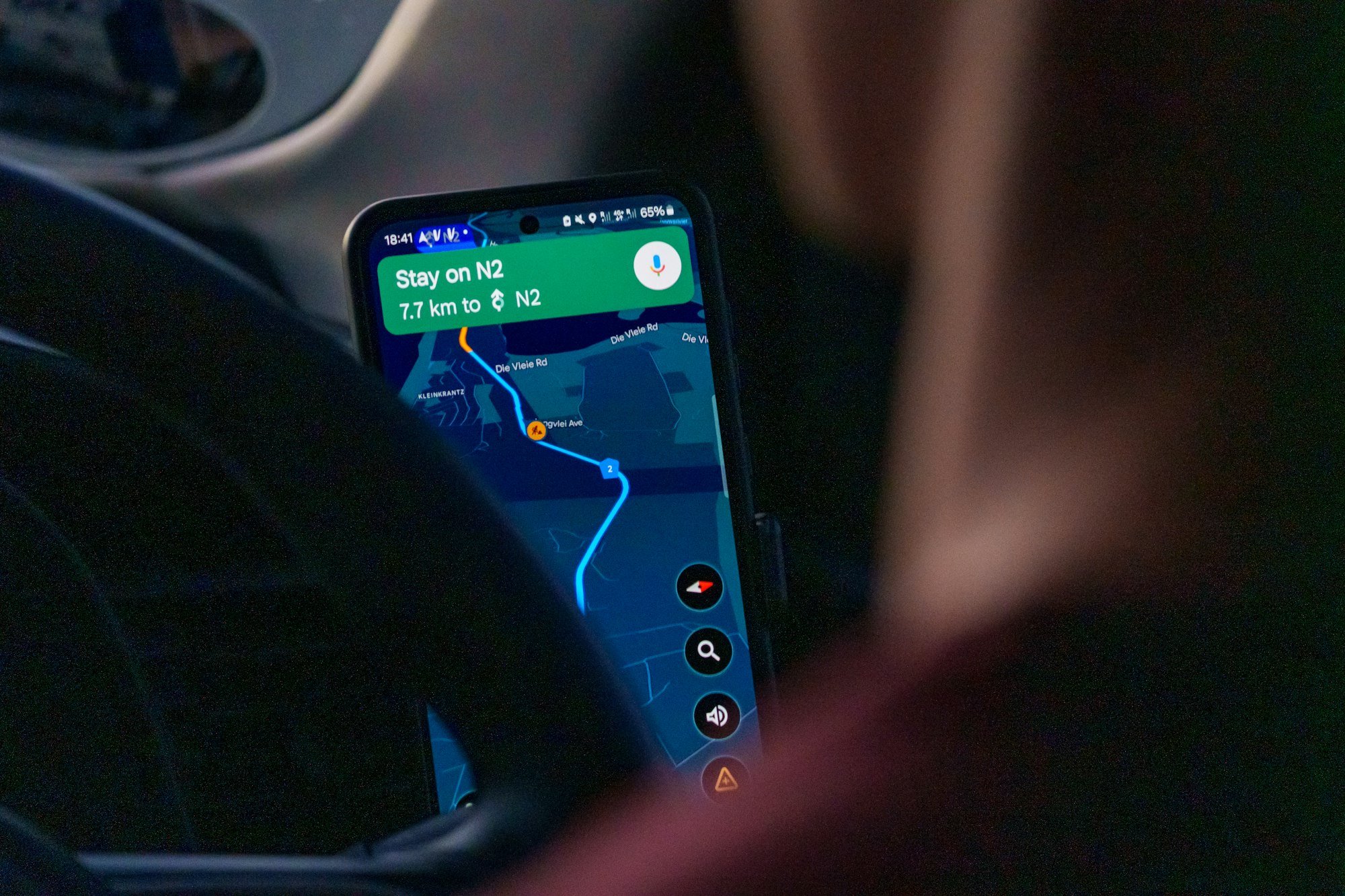
Which LPR companies and products should privacy-minded readers understand?
The point is not that every LPR vendor is identical. The point is that the business model, retention policy, sharing model, and customer base matter. A privacy-critical review should look beyond the camera and ask who can search the data later.
| Company or product | What it offers | Privacy-critical concern |
|---|---|---|
| Flock Safety | Networked LPR cameras for law enforcement, neighborhoods, and businesses | Even with retention policies and audit features, network effects can make local cameras part of broader searchable surveillance infrastructure. |
| DRN Data | Commercial vehicle-location data and analytics | Commercial plate scans can serve repossession, lending, insurance, fraud, and investigations, expanding LPR use beyond public safety. |
| Motorola Solutions VehicleManager | LPR analytics and investigative tools | Powerful search, sharing, and analytics features can make historical location data more useful and therefore more tempting to retain and query. |
Flock Safety markets itself as a public-safety technology ecosystem and publishes an LPR policy describing how license plate reader data may be handled: https://www.flocksafety.com/legal/lpr-policy. The privacy tradeoff is that safety claims depend heavily on governance: retention limits, sharing restrictions, audit logs, misuse penalties, and whether residents have meaningful visibility into deployment.
DRN Data describes its work around nationwide LPR data and vehicle intelligence: https://drndata.com/. The practical benefit is obvious for repossession, fraud detection, lending, and asset recovery. The privacy risk is also obvious: a commercial vehicle-location database can affect people who never knowingly opted into being tracked.
Motorola Solutions’ VehicleManager describes LPR analytics, search, sharing, and vehicle-location capabilities: https://www.motorolasolutions.com/en_us/video-security-access-control/license-plate-recognition-camera-systems.html. The benefit is investigative efficiency. The risk is that efficiency can lower the friction that once protected ordinary people from being casually investigated.
The privacy question is not “Are these tools useful?” Many surveillance tools are useful. The better question is: useful to whom, under what limits, with what oversight, and at whose expense?
Enjoying this article? Make it easier to find more like it. Select The Privacy Report as a preferred source on Google and get more of our reporting in your results.
Select The Privacy Report as a preferred source on Google.
Why is “just drive less” outdated privacy advice?
A lot of privacy advice fails because it assumes the individual can opt out. That assumption does not work well for LPRs.
You can change browsers. You can reject cookies. You can use a password manager, hardware key, encrypted DNS provider, or local-first service. Those choices matter. But a license plate is a government-issued identifier attached to a legally required object. In most places, you cannot simply remove it, rotate it weekly, or obscure it without risking legal consequences.
That makes LPR tracking different from many digital privacy problems. It is closer to carrier location tracking or credit bureau profiling: the system is built into infrastructure you need to participate in ordinary life.
This is where people go wrong. They look for a consumer hack when the real fix is governance.
A privacy screen may protect your laptop in a coffee shop. A VPN may hide some browsing activity from an ISP. But LPR surveillance requires policy limits: strict retention periods, bans on commercial resale, warrant requirements for historical searches, public camera maps, independent audits, misuse penalties, and meaningful deletion rules.
 Omar Torres
What should a good LPR privacy policy require?
A serious LPR privacy policy should assume that location history is sensitive by default. It should not treat plate scans as harmless because they happened in public.
At minimum, communities should demand short retention, narrow use, strict access controls, and transparent reporting. The ACLU has argued that license plate readings should not generally be treated as public data and should be protected if retained at all: https://www.aclu.org/news/privacy-technology/alpr-as-public-data
That position is reasonable. If a city would not publish a searchable list of everyone who drove past a reproductive health clinic, immigration office, mosque, union hall, or domestic violence shelter, it should not create a public-records loophole that exposes the same thing through plate scans.
The strongest policies should include:
- No commercial sale or resale of plate data.
- No use for debt collection, insurance scoring, immigration enforcement, or protest monitoring without explicit legal authority.
- Short default retention measured in days, not months or years.
- Warrants for historical searches that reveal movement patterns.
- Public disclosure of camera locations, vendors, retention rules, and sharing partners.
- Independent audits, not just vendor-provided audit logs.
- Real penalties for misuse by employees, officers, contractors, or partner agencies.
- Deletion rights where legally possible.
The uncomfortable truth is that many communities approve LPR systems before asking these questions. By the time residents notice, the cameras are already installed, the contract is signed, and the vendor has become part of the public-safety workflow.

Clear steps to protect your digital life.
How does this connect to data sovereignty at home?
Data sovereignty starts at home, but it does not end at your router.
Self-hosting photos, using encrypted backups, blocking trackers, and reducing app permissions are all meaningful. They reduce unnecessary data leakage from your devices and accounts. But sovereignty also means understanding which data trails are created by the world around you, not just by the devices you own.
Your car is one of those trails.
You can make your home network more private and still be tracked by cameras on the way to work. You can avoid loyalty programs and still be profiled through a plate scan at a shopping center. You can disable phone location and still appear in a vehicle-location database.
This is not a reason to give up. It is a reason to widen the privacy conversation.
Personal privacy habits matter most when paired with collective demands: better laws, better procurement rules, better vendor contracts, and better public oversight. The next privacy frontier is not just what your devices reveal. It is what your environment records about you automatically.
 Omar Torres
What can readers do about license plate reader privacy now?
Start local. LPR systems are often approved through city councils, police boards, school boards, homeowners associations, business improvement districts, and procurement committees. That means residents can ask direct questions before the system becomes invisible infrastructure.
Ask who owns the data. Ask who can search it. Ask how long it is retained. Ask whether outside agencies can access it. Ask whether commercial partners can use it. Ask whether the public can see audit logs. Ask whether the contract bans resale, secondary use, and bulk sharing.
The practical privacy move is not paranoia. It is paperwork.
Surveillance often expands because contracts are signed quietly and policies are written vaguely. The antidote is specific language: retention limits, access limits, sharing limits, audit requirements, and deletion rules.
This is also why the “nothing to hide” mindset is so weak. Privacy is not about hiding wrongdoing. It is about preventing institutions and companies from turning normal life into searchable evidence.
Your car does not need to be “smart” to leak data. It only needs to pass a camera.
FAQs
Are license plate readers legal?
Usually, yes, but legality depends on jurisdiction, deployment, retention, sharing, and use. A camera reading plates in public may be allowed, while long-term retention, broad sharing, or certain searches may raise constitutional, statutory, or civil liberties concerns.
Do LPRs only track criminals?
No. License Plate Reader (LPR) systems scan vehicles broadly, then compare plates against lists or store records for later search. Most scans are of ordinary drivers who are not suspected of any crime.
Is a license plate considered personal data?
It can be. A plate may identify a vehicle rather than a person by itself, but when linked to registration records, location history, images, or other databases, it can become personal and highly sensitive.
Can I opt out of license plate reader tracking?
Usually not in any practical individual sense. Because plates are legally required and visible in public, meaningful protection usually depends on local policy, vendor contracts, retention limits, and laws governing access and sharing.
What is the biggest privacy problem with LPRs?
The biggest problem is aggregation. A single scan is limited. A searchable history of scans across time and place can reveal routines, relationships, beliefs, medical visits, work patterns, and sensitive associations.
What to do next: Ask your city, police department, HOA, or business district for its License Plate Reader (LPR) contract and data-retention policy before the cameras become permanent infrastructure. If your community already has LPRs in place, read more on what to do next.


